Robotaxis Stopped Being Science Fiction This Month
I’ll be honest. For two years, I had my doubts about Tesla’s robotaxi. Tesla first showed a car with no steering wheel at a Hollywood film studio. Critics called it a stage prop meant to push up the share price. I didn’t go that far, but I wasn’t sure it would ever carry real passengers.
Then two things changed my mind. First, the cars are now out on real streets. You can see Cybercabs driving around Austin and picking up real, paying passengers. These are small two-seat cars with no steering wheel and no pedals. Second, there is paperwork to prove it. Texas keeps an official public list of self-driving cars. In early October 2026, Tesla added 150 cars to that list in one go. Its count jumped from 169 to 319, with more than 300 Cybercabs now in service.
A stage prop doesn’t appear on a government list. So let’s look at what is really going on — and what it means for the rest of us.
The Real Story Is the Math, Not the Robot
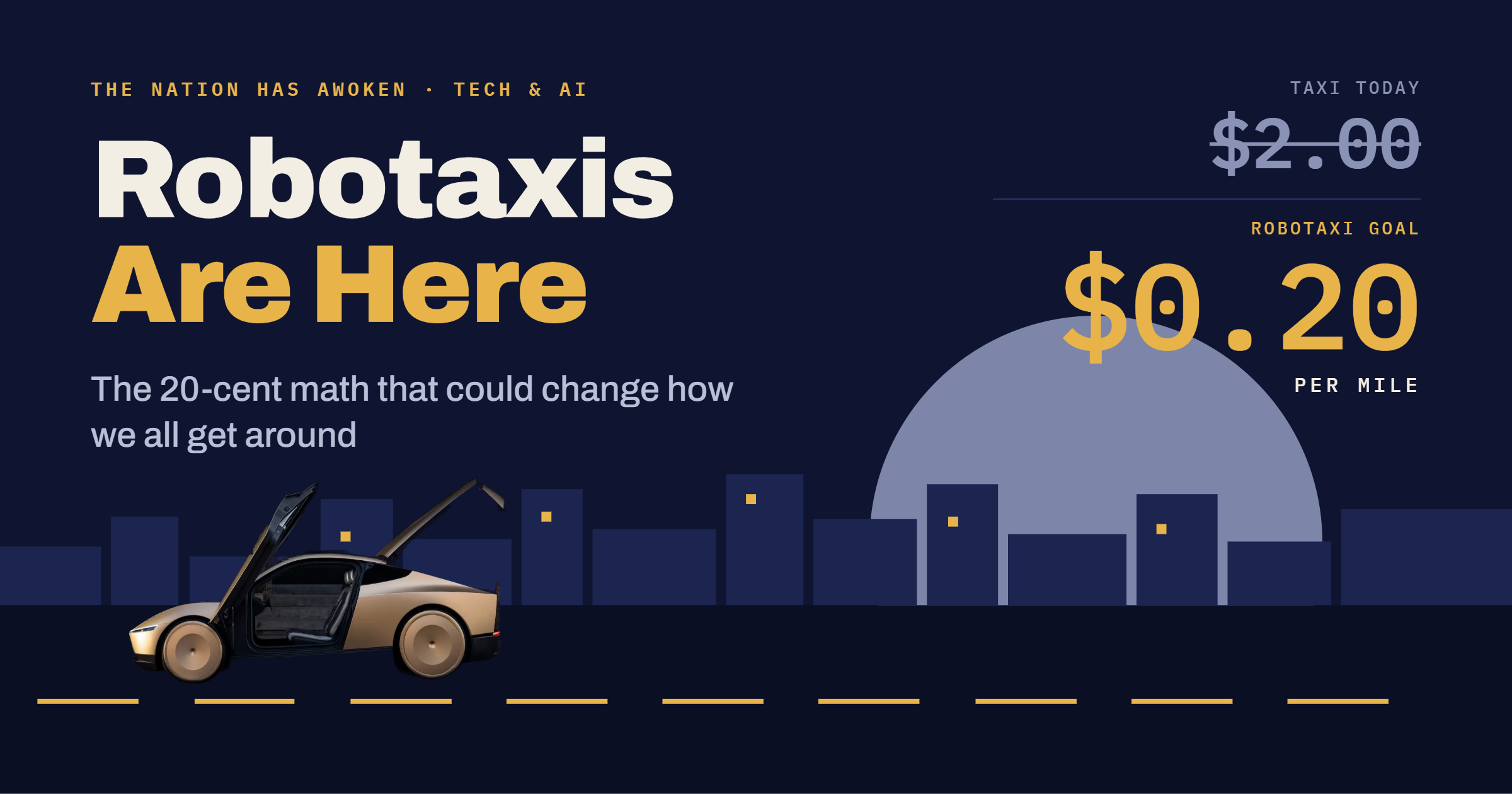
Forget the cool doors. This story is about one number: how much it costs to carry one person for one mile.
A ride in an Uber or a taxi in the US costs about $2 a mile. More than half of that money goes to the driver. Tesla wants the cost of running its cars to drop to about 20 cents a mile. Even after Tesla adds its profit, a rider might pay only 30 to 40 cents.
This puts Uber in a trap:
- Lower prices, lose drivers. Drivers can’t pay for fuel and rent, so they stop working.
- Fewer drivers, longer waits. When riders wait longer, the app raises prices. This is called surge pricing.
- Higher prices cancel the cut. The price drop ends up making rides more expensive.
Uber has a second problem. Uber never owned any cars. Its drivers use their own cars and pay for fuel, insurance and repairs themselves. That is how Uber kept its costs low. But robotaxis have no drivers, so someone must buy the cars. If Uber bought thousands of robot cars, it would have to pay for all of them — plus fixing, charging and cleaning them. Uber would no longer be a simple app. It would become an expensive car-fleet business.
Tesla is the opposite. It makes the car, the battery, the software and the app. It controls every cost itself.
Now think about your own car. AAA, the big US motoring club, says owning a new car costs about 86 cents a mile. And most cars sit parked about 95% of the time. That’s a very expensive lawn ornament.
Cheap Cameras vs Expensive Lasers
Waymo, a sister company of Google, has run driverless taxis safely for years. That deserves respect. But being safe and growing fast are two different things.
| Waymo | Tesla Cybercab | |
|---|---|---|
| How it “sees” the road | Lasers (called lidar), radar and cameras | Eight cameras only |
| Cost per car | $100,000 or more | Aim: under $30,000 |
| How it’s made | Buys a car, then adds the gear by hand | Built whole in Tesla’s own factory |
| Before entering a new city | Must map every street in detail | No map needed in advance |
In simple terms, Waymo adds cars slowly, one expensive car at a time. Tesla can make thousands of cheaper cars quickly on its own assembly lines. That means Tesla can spread to new cities much faster.
For now, cameras do have one limit: they need light to see. That’s why Tesla’s rides in Austin end at 11 p.m. Lidar sends out its own laser light, so it works in the dark. Elon Musk has said one case is still hard: a dark animal on a dark road with no streetlights. Better software is meant to close that gap.
Here is the moral twist. Human drivers kill over 40,000 people a year in the US. Yet nobody bans driving. But one deadly robotaxi crash could stop the whole industry. We expect far more from machines than from ourselves.
Meanwhile, old enemies have become partners. Waymo once took Uber to court for stealing its self-driving secrets. Now you can book a Waymo car inside the Uber app in Austin and Atlanta. But each ride must now make money for two companies. Tesla only has to pay itself. And Tesla’s next city is Dallas.
What Robotaxis Teach Us About Governing Technology
This isn’t just a business story. It’s a test of how countries handle powerful new technology.
Every government watching Austin should take notes. Here are three areas they need to focus on:
1. Open records build trust. The best proof in this story wasn’t a tweet from a CEO. It was an entry on a public list that anyone can check. When licenses, permits, contracts and safety data are open, rumors lose their power. Openness isn’t a luxury. It’s as basic as roads and power lines.
2. Make the rules before the technology arrives. Texas already had laws for self-driving cars, so the new tech came in the proper way. Too many governments wait until something goes wrong, then ban it in a panic. It’s better to write rules for AI, self-driving cars and data calmly, with experts — not after a viral video.
3. Protect the people left behind. Millions of people earn a living by driving taxis, ride-hailing cars and delivery vans. When cars no longer need drivers, those jobs are at risk. A wise government plans early, with training for new skills and support for people who lose work.
There’s a moral question too. If a robot car kills someone, who is to blame? In my view, the company that runs the car must take responsibility. But we need clear rules on how and when that blame applies. Was it a software fault, poor upkeep or someone else’s mistake? And there must be proper insurance, so victims and their families are paid quickly, without years in court. We should settle all this before driverless cars spread, not after the first funeral.
The Road Ahead
For a hundred years, every car ride meant paying for a driver’s time. Austin shows this is starting to change. The problems are real — seeing at night, safety checks and lost jobs. But the direction is clear.
If shared robotaxis replace private cars, cities will change too. Parking buildings could become parks and homes. Imagine your city with fewer cars and more trees. I’d take that deal.
Most countries will never build their own Cybercabs. They don’t need to. But every country can still get ready. It can keep open public records, so people can see what is happening on their roads. It can write fair rules early, before the technology arrives. And it can help drivers learn new skills before their jobs disappear. None of this needs billions of dollars or a car factory. It only needs good planning and the will to act.
Your turn: If a robotaxi cost less than half of owning your car, would you sell it? And should your government welcome driverless cars or wait until they are proven safe? Tell me in the comments, and share this with a friend who still thinks robots can’t drive.
Leave a Reply