Every budget season in Pakistan, the same questions return. Why are taxes increasing? Why are electricity bills becoming more expensive? Why does the government keep borrowing money? And why does economic growth remain disappointingly low despite repeated promises of reform?
Politicians, economists, and bureaucrats often provide different explanations, but beneath these debates lies a deeper issue that many analysts describe as elite capture. In a recent discussion, veteran journalist Najam Sethi argued that elite capture is one of the most important reasons Pakistan struggles to achieve sustainable economic growth. If he is correct, then Pakistan’s problem is not simply a shortage of resources. It is a question of who controls those resources and who benefits from the system.
What Is Elite Capture?
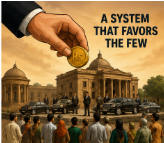
Elite capture occurs when a small group of powerful individuals, families, industries, or institutions shape government policies primarily for their own benefit rather than for the benefit of society as a whole. These advantages may come in the form of tax exemptions, subsidies, favorable regulations, protection from competition, access to cheap loans, or influence over policymaking.
The result is a system where ordinary citizens shoulder a larger burden while powerful groups receive special treatment. Imagine a football match where one team writes the rules, chooses the referee, and decides the score. The game may appear fair from the outside, but the outcome is heavily tilted in favor of a select few. That, in simple terms, is how elite capture works.
The Cost of Elite Privileges
This creates a strange contradiction. The government regularly claims it needs more revenue and therefore imposes additional taxes on businesses, consumers, and salaried workers. Yet at the same time, certain sectors continue to enjoy privileges that cost the national treasury enormous sums of money.
For many Pakistanis, it feels like running on a treadmill. They pay more every year, but the country’s financial problems never seem to disappear. While ordinary citizens face rising taxes and utility bills, influential groups often benefit from special arrangements that protect their profits and reduce their risks. The result is a widening gap between those who bear the burden and those who enjoy the benefits.
The “Infant Industry” That Never Grew Up
One of the most interesting concepts discussed by Sethi is the economic idea known as the “infant industry argument.” The theory itself is reasonable. When a developing country is trying to establish new industries, those industries may initially need protection from powerful foreign competitors. Governments therefore provide subsidies, tariffs, and tax incentives to help them survive until they become competitive.
The problem arises when these industries never stop receiving support. What was intended as temporary protection becomes permanent dependence. Instead of standing on their own feet after a decade, some industries continue receiving government assistance for generations. In effect, the “infant” industry becomes a sixty-year-old child still asking for an allowance.
This is where economic policy shifts from nurturing growth to protecting privilege. Resources that could have been invested in new industries, education, technology, or infrastructure continue flowing toward sectors that have already received decades of support.
The Sugar Industry: Pakistan’s Most Famous Example
No industry illustrates this problem more clearly than Pakistan’s sugar sector. If elite capture had a mascot, many critics would argue it would be sugar. The industry occupies a unique position in Pakistani politics because many influential political families have direct or indirect interests in sugar mills.
This creates an obvious conflict of interest. When policymakers themselves benefit from industry protections, meaningful reform becomes extremely difficult. Over the years, the sugar sector has enjoyed various forms of government support, including protection from foreign competition, favorable regulations, export incentives, and other policy advantages.
Yet despite decades of assistance, the industry frequently experiences crises. One year there is a shortage of sugar. The next year there is a surplus. Sugar is exported, only to be imported later when domestic supplies become tight. This cycle repeats itself so often that many Pakistanis have stopped being surprised by it. Consumers end up paying higher prices while industry owners remain protected from the consequences of market competition.
The Water Problem
The sugar issue is not just an economic problem; it is also an environmental one. Sugarcane is among the most water-intensive crops grown in Pakistan. At a time when the country faces increasing water shortages, critics argue that dedicating large amounts of scarce water resources to sugar production makes little economic sense.
Every acre used for sugarcane is an acre that could potentially support other crops requiring less water and generating greater value for the economy. Pakistan’s water crisis is already becoming one of the country’s most serious long-term challenges. Continuing to subsidize a water-hungry crop raises difficult questions about whether resources are being allocated in the national interest or in the interest of politically connected groups.
Why Reforms Never Happen
If the problems are so visible, why are they not fixed? The answer is simple but uncomfortable: every reform creates winners and losers.
The winners would likely include consumers, taxpayers, future generations, and the economy as a whole. The losers would be those groups that currently enjoy special privileges. Since these groups possess considerable political and economic influence, they are often able to slow, weaken, or completely block reforms that threaten their interests.
Governments change. Finance ministers change. Policies change. Yet the underlying incentives often remain remarkably stable. As a result, many reforms are discussed repeatedly but implemented only partially—or not at all.
The Broader Lesson
The sugar industry is not the real story. It is merely one example of a much broader pattern. The larger issue is a governance system in which special interests frequently have more influence than the national interest.
As long as resources continue flowing toward politically connected sectors rather than productive sectors, Pakistan will struggle to achieve the rapid growth needed to create jobs, reduce poverty, and improve living standards. High-growth economies typically reward efficiency, innovation, and competition. Economies dominated by elite capture often reward connections, influence, and access.
That difference can determine whether a nation prospers or stagnates.
What Real Reform Would Require
Real reform requires political courage. It means asking difficult questions that governments often prefer to avoid.
Should subsidies continue indefinitely? Should protected industries be forced to compete in open markets? Should powerful sectors pay taxes under the same rules as everyone else? Should economic policy prioritize national productivity over political convenience?
These are uncomfortable questions because they challenge groups that possess considerable influence. Yet they are precisely the questions that must be addressed if Pakistan hopes to break free from its recurring economic crises.
Final Thought
Pakistan’s challenge is often presented as a shortage of money. However, it may be more accurate to describe it as a shortage of political will.
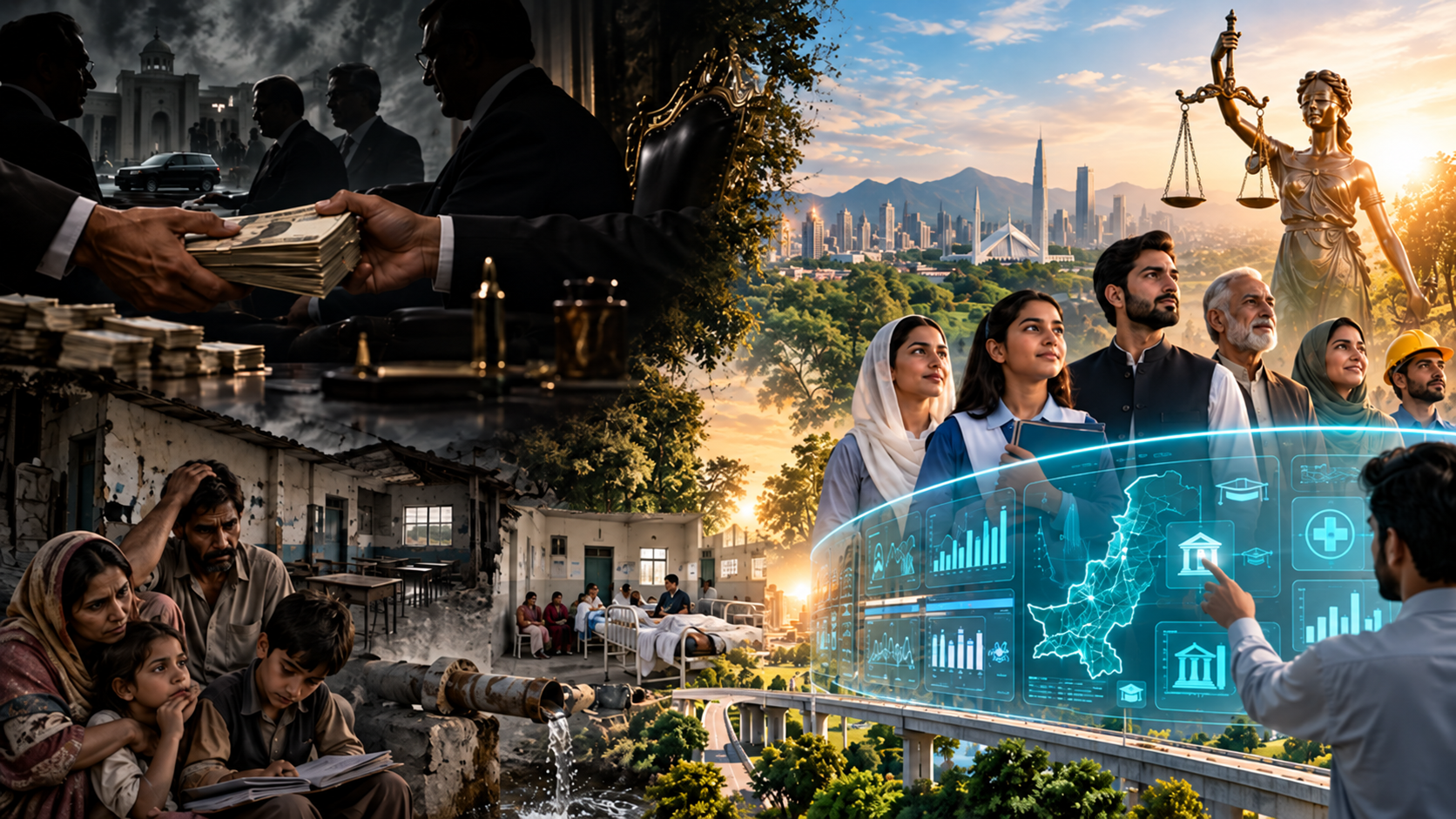
The country possesses talented people, natural resources, entrepreneurial energy, and strategic advantages. What it lacks is the determination to confront systems that reward privilege over productivity. Until that changes, ordinary citizens will continue paying a hidden tax—not through official tax forms, but through slower economic growth, fewer opportunities, higher prices, and a future that always seems just out of reach.
The debate over elite capture and the sugar industry is therefore not really about sugar. It is about whether Pakistan’s economy will continue serving a privileged few or finally begin serving the broader public. That question may well determine the country’s economic future for decades to come.

Leave a Reply