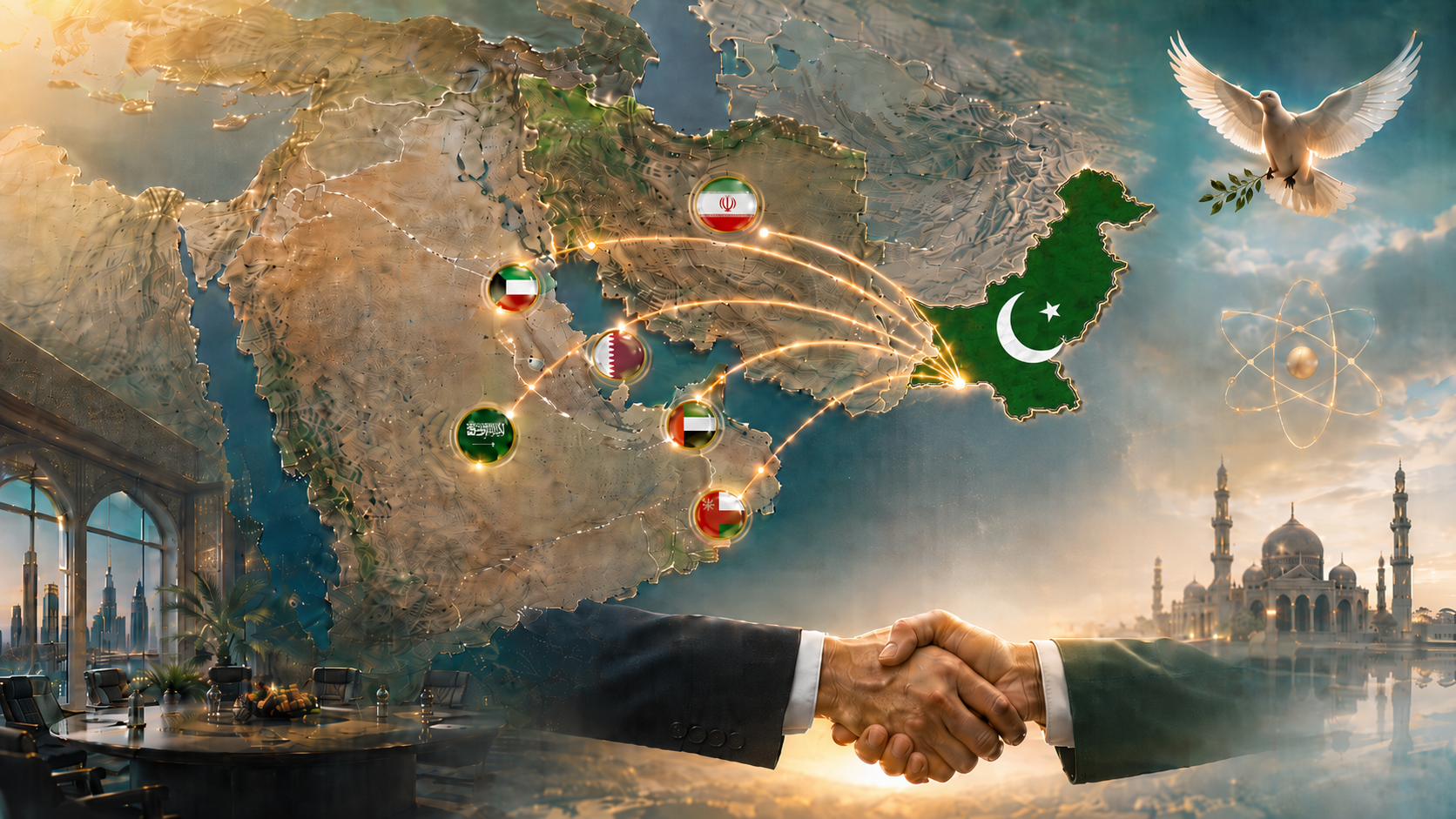
In a recent interview, Najam Sethi offered an important view of Pakistan’s possible role in reducing tensions between Iran and America. His argument was bold: Pakistan may have played a far more serious diplomatic role than many people realize.
Whether one fully agrees with that assessment or not, the discussion raises a major question. Is Pakistan entering a new phase in West Asian diplomacy? More importantly, can Pakistan convert this moment into long-term influence, security relevance, and economic benefit?
A Region Tired of War
West Asia has suffered from decades of tension, sanctions, proxy conflicts, invasions, and mistrust. Every new crisis creates fear far beyond the region. Oil prices rise. Shipping routes become unsafe. Global markets become nervous. Ordinary people everywhere end up paying the price.
That is why even a limited diplomatic understanding matters. It may not solve every issue immediately, but it can reduce the temperature. It can stop escalation. It can give countries time to talk instead of fire missiles. In a region this sensitive, even a pause can save lives.
The Real Issue: The Nuclear Question
The Iran-America dispute has many visible layers, but in my view the central issue is the nuclear question. Other matters such as sanctions, shipping routes, regional influence, and armed groups are important, but they are secondary. The main disagreement has always been whether Iran’s nuclear program can be monitored and limited in a way that satisfies America while preserving Iran’s dignity and sovereignty.
This is also why the war should not have happened. If the nuclear issue was already close to being resolved through earlier negotiations in Oman, then military escalation was unnecessary. A matter that was moving toward diplomacy should not have been pushed into war. When negotiations are still alive, war is not strength. It is often a failure of patience and political judgment.
Why Pakistan’s Role Matters
Pakistan has a unique position. It shares a border with Iran. It has deep religious, cultural, military, and economic ties with Gulf countries. It has also maintained long and complicated relations with America. That gives Pakistan access to different sides of the regional equation.
Pakistan cannot replace a superpower. It does not have that kind of economic reach. But it can act as a bridge. Sometimes, diplomacy does not need the biggest actor. It needs the actor who can talk to everyone without being rejected by everyone. That is where Pakistan may have found an opening.
America’s Diminishing Security Role in West Asia
For decades, America was seen as the main security guarantor of West Asia, especially for the Gulf states. But that role appears to be changing. Many countries in the region now seem less confident that America will always protect them, always stay committed, or always act in their best interest.
This does not mean America is leaving the region completely. That would be too simple. But its role is no longer unquestioned. Regional countries are beginning to think more seriously about their own security arrangements. They are asking: Who can we trust? Who can help reduce conflict? Who can talk to both Iran and the Gulf?
Pakistan’s Elevated Security Role
This is where Pakistan can play a more elevated security role. Not as an occupying power. Not as a replacement for America. And certainly not as a country looking to dominate West Asia. Pakistan’s role can be different: a stabilizing Muslim-majority power that can help build bridges, support defense cooperation, and reduce the chances of regional war.
Pakistan has a large professional military, nuclear capability, experience in security affairs, and strong ties with important regional states. If used wisely, these assets can give Pakistan diplomatic weight. But this weight must be used carefully. Pakistan should become a source of stability and cohesion, not another source of division.
The Risk of Mediation
Mediation sounds impressive, but it is risky. If talks succeed, everyone wants credit. If talks fail, the mediator can be blamed by both sides. Pakistan’s involvement in such a sensitive process therefore requires maturity, discipline, and quiet confidence.
The biggest challenge is trust. Iran must believe Pakistan is not acting only for the Gulf or America. The Gulf states must believe Pakistan is not leaning too far toward Iran. America must believe Pakistan can help reduce escalation. That is not an easy triangle to manage. It is diplomacy on a tightrope, without the luxury of a safety net.
The Strait of Hormuz Factor
One of Iran’s greatest strategic advantages is geography. The Strait of Hormuz is one of the world’s most important energy routes. If tension rises there, the global economy immediately feels the shock. Oil prices can jump. Shipping can slow. Markets can panic.
This gives Iran leverage. It also gives the world a reason to seek calm. No serious economy wants a long crisis in such a sensitive waterway. That is why regional states may be willing to support a diplomatic settlement, even if they have serious concerns about Iran’s wider policies.
The Role of Gulf States
The Gulf states are in a difficult position. They want stability, investment, trade, and economic growth. They do not want endless war near their borders. At the same time, they have their own security concerns and their own history of mistrust with Iran.
This is another area where Pakistan may become useful. If Pakistan can help reduce mistrust between Iran and the Gulf states, it can become a valuable diplomatic partner. Not a regional policeman. Not a substitute for local decision-making. But a trusted channel of communication when normal channels fail.
Over time, if trust-building efforts succeed, there is also the possibility of a broader regional security framework emerging—something more structured and cooperative, potentially on the lines of a collective security alliance similar to NATO. Such an arrangement would not be immediate or easy, given the deep divisions in the region, but even the gradual movement toward coordinated defense, shared intelligence, and mutual security guarantees could significantly enhance stability. In such a scenario, Pakistan’s role as a bridge-builder and facilitator could become even more important, helping lay the groundwork for a more unified and resilient regional order.
Israel as a Complicating Factor
Any peace process involving Iran will face resistance from those who see Iran as a permanent threat. Israel, in particular, views Iran’s regional influence and nuclear capacity as a major danger. This means any understanding between Iran and America may face pressure, sabotage, or political opposition.
This is why the process will not be smooth. There may be accusations, attacks, walkouts, and sudden crises. A fragile deal can survive only if the main parties remain committed when the first serious test appears. Peace is not proven when leaders shake hands. Peace is proven when someone tries to break the table and the others refuse to walk away.
What Pakistan Could Gain
If Pakistan helps move this process forward, it could gain diplomatic respect. It could improve its image from a country often seen through internal political crisis to one viewed as a serious regional actor. That matters.
Pakistan could also gain economically. Better relations with Iran may help revive energy cooperation. Stronger Gulf confidence could encourage investment. Greater diplomatic relevance could improve Pakistan’s bargaining power in international forums. But none of this will happen automatically. Influence must be converted into policy, and policy must be converted into national benefit.
What Pakistan Must Avoid
Pakistan must avoid overclaiming success. Diplomacy is delicate. If a country becomes too hungry for applause, it can lose credibility. The goal should not be chest-thumping. The goal should be quiet effectiveness.
Pakistan must also avoid becoming trapped in other people’s conflicts. A bridge is useful only when both sides can walk on it. If Pakistan leans too far in one direction, it may lose the very role that makes it valuable.
A Chance for Strategic Maturity
This moment can become important for Pakistan if handled wisely. It can show that Pakistan is capable of serious statecraft. It can show that the country is not merely viewed as a victim of security challenges, but also as a potential contributor to regional stability.
But foreign policy strength begins at home. Pakistan needs internal stability, economic discipline, and institutional coordination. No country can lead abroad while remaining confused at home. Diplomatic influence begins with national credibility.
Internal Stability: The Foundation of External Credibility
Pakistan’s growing diplomatic role must be supported by stability and credibility at home. Lasting global influence requires internal political certainty, strengthened democratic processes, and free, fair elections that reflect the will of the people.
Respect for human rights should remain central to governance, as it builds trust both domestically and internationally. The current leadership has an opportunity to address these challenges and lay a stronger foundation for the future.
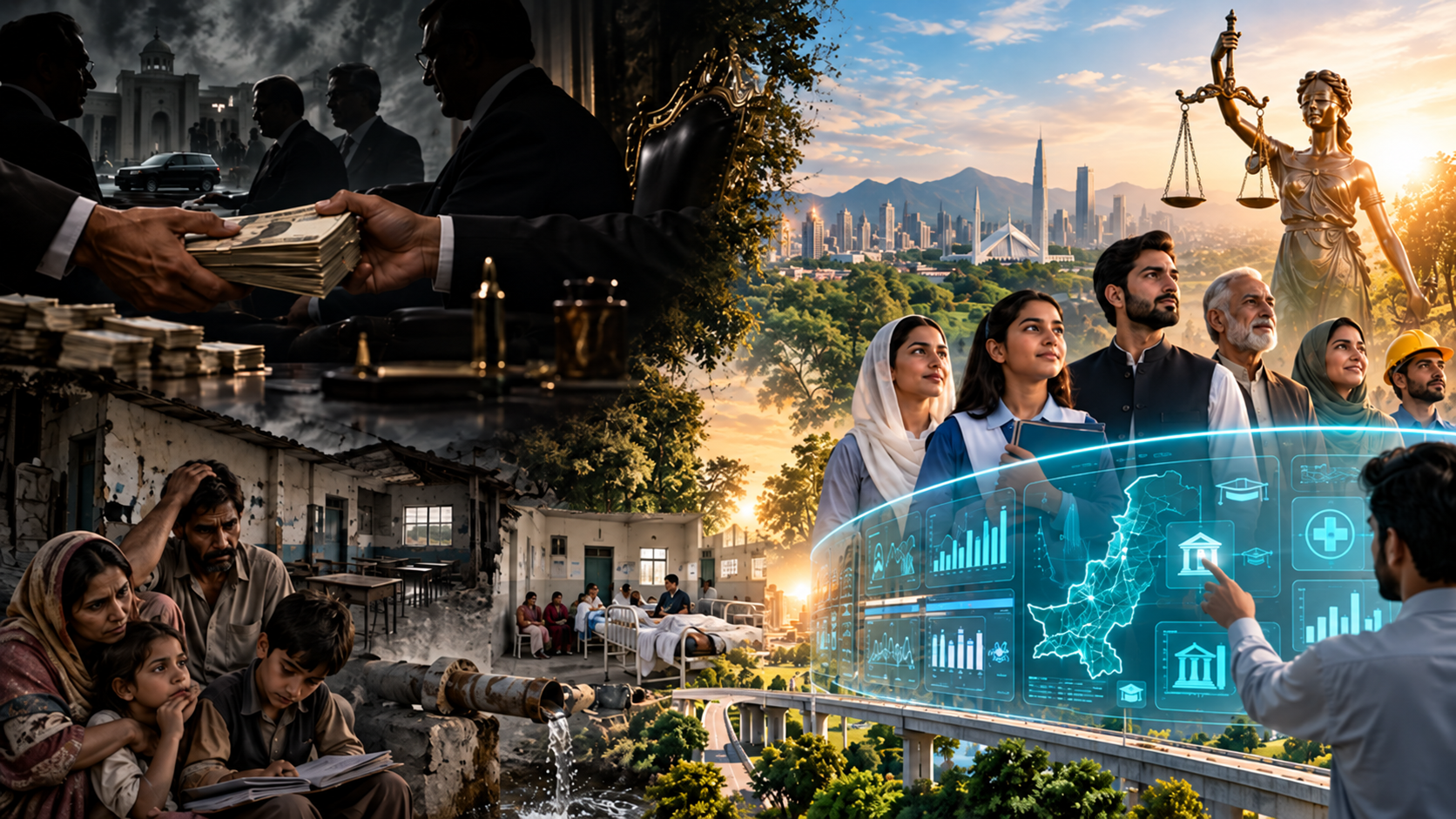
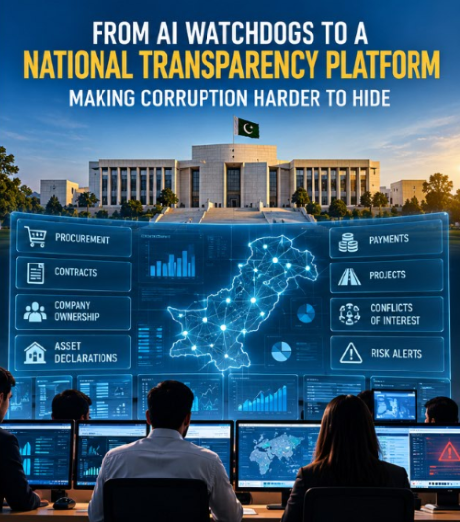
Establishing a government with genuine public support is essential. Good governance—driven by transparency, accountability, and strong institutions—must be prioritized, while corruption is addressed firmly to restore public confidence.
At the same time, the military’s role within governance must be clearly defined. It should remain separate from political processes, avoiding direct or indirect interference, while contributing constructively to national integrity through its institutional strength. Mechanisms should ensure that governance serves the national interest rather than individual or private gains. This balance can strengthen democratic institutions and overall state performance. Additionally, considering the current situation in West Asia, the military ideally placed to play a role in regional security, contributing to stability and safeguarding broader interests.
Only a stable, united, and well-governed Pakistan can fully realize its potential as a credible and influential global actor.
Conclusion: A Door Has Opened
The current diplomatic moment does not guarantee success. The issues are deep. The mistrust is old. The region is volatile. But a door has opened, and Pakistan may have an opportunity to play a constructive role in West Asia’s changing security order.
The real test is what happens next. Can Pakistan help keep dialogue alive? Can it improve ties with Iran and the Gulf at the same time? Can it turn diplomatic visibility into real national benefit?
At the same time, Pakistan must ensure that its internal political stability, governance standards, and respect for human rights match its external ambitions. A strong, stable, and accountable government with public support will be essential for sustaining any diplomatic success.
If Pakistan acts with wisdom, patience, balance, and strong governance at home, this could become more than a temporary headline. It could become the beginning of a new diplomatic chapter.

Leave a Reply